1
Start from a proven library
Working with the development director, we built Canvas on PrimeNG, an open-source library, so teams could get off spreadsheets in weeks rather than months. The tradeoff: its structure limited some changes.
lululemon, 2023 to 2025
lululemon’s internal teams and hundreds of outside vendors ran critical product work, like pricing raw materials, in spreadsheets. I led a multidisciplinary team that turned those workflows into digital tools, on a shared design system we built so eight product teams could modernize without stopping delivery.
When I was brought in, lululemon’s internal tools existed only as Excel spreadsheets, and more than 20 teams were building tools that way. The company’s customer-facing design system, DAISY, was made for shopping, not dense, data-heavy business workflows.
We had one month to ship something teams could use. Modernizing couldn’t mean a freeze, and the tools had to work for everyone who depended on them, including hundreds of outside vendors. The business goal was to modernize a manual process and cut the time to complete a cost sheet from weeks to days.
Three decisions let the teams deliver fast without stopping their work. We prioritized three workflows, with costing first.
I led a multidisciplinary team of designers and engineers and coordinated adoption across eight product teams. Letting each team move on its own release schedule protected their delivery, and the first tool’s success won the budget and executive support to keep going.
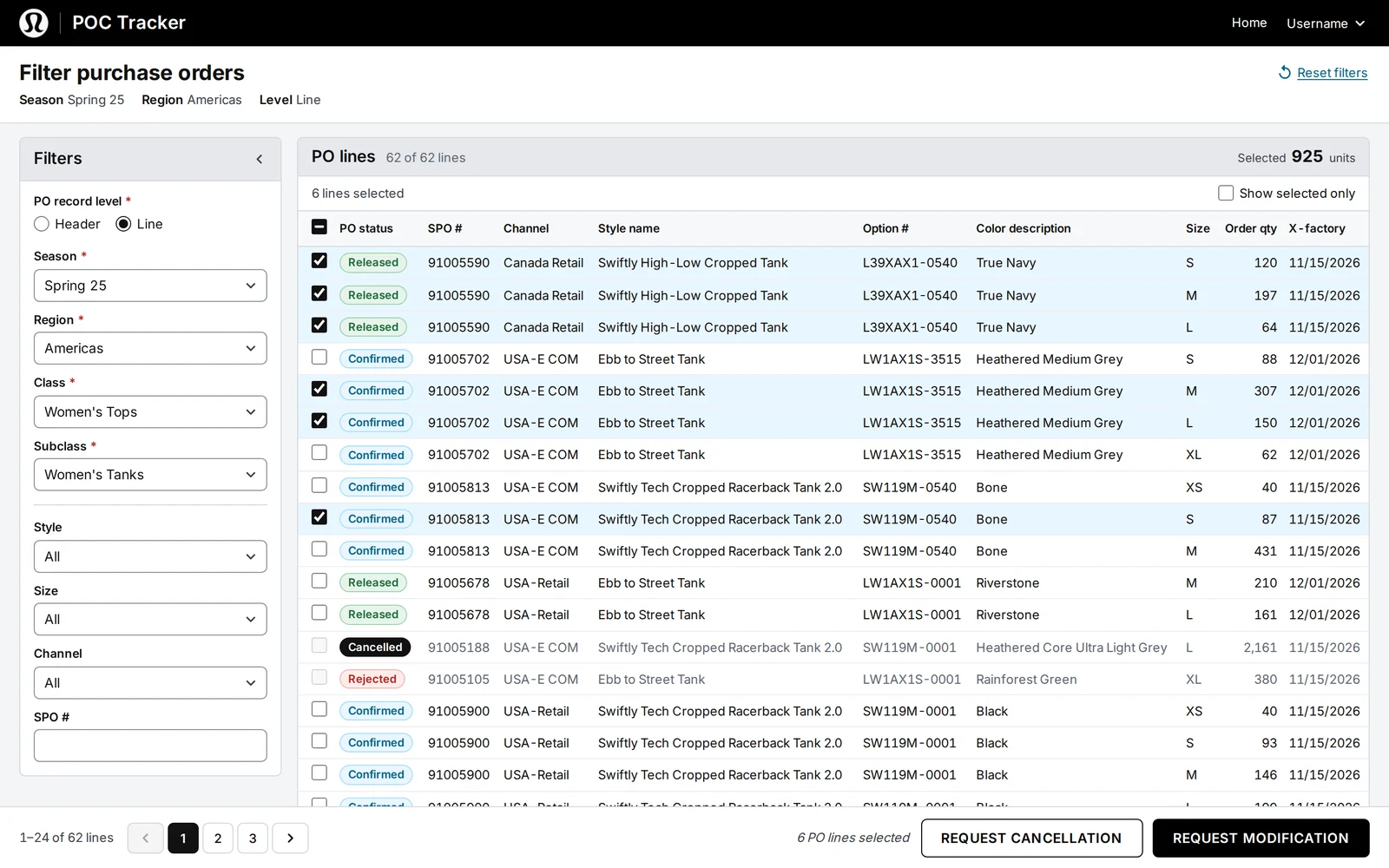
Working with the development director, we built Canvas on PrimeNG, an open-source library, so teams could get off spreadsheets in weeks rather than months. The tradeoff: its structure limited some changes.
Each team moved on its own release schedule, so modernizing never meant a delivery freeze. Some screens were only reskinned to match at first, rather than rebuilt.
When lululemon rebranded six months in, we dropped brand red so errors stayed clear for the people doing the work. The tools drifted from the main brand, but they got clearer.

The first proof point was Raw Material Costing, a suite of tools more than 500 vendors use to price raw materials with lululemon. Its success won the budget and executive support to transform more workflows. The people who make the product deserved the same quality bar as the people who buy it.
Cost sheets are dense, multi-step forms that vendors and lululemon’s costing teams work through together. Grouped fields, clear required states, autosave, and status tags keep that complexity manageable for people who use the tools every day.
This is the same prototype as on kirsten.systems. Move through the tabs and change a detail, and the offered price recalculates as you type, so vendors can see how their price is built. Work saves as you go, so nobody halfway through eight tabs loses progress.
Rebuilt for this case study with example numbers. It isn’t lululemon’s production code or costing model.
In six months, eight product teams moved onto a shared platform without a delivery freeze, each on its own release schedule, and more than 500 vendors use the costing tools built on it. The average time to complete a cost sheet dropped from six weeks to four days.