From a half-built system to one standard for AI-assisted work.
I joined FICO in 2025, when its design system was about halfway built. A few months in, AI tools arrived across the company with no standard for reviewing what they produced. I rebuilt the foundation with a small team, then used it to set that standard across marketing and product.
My role
Lead Systems Designer
Team
Three engineers and me
Scope
The design system for FICO’s decisioning and analytics platforms, plus AI and accessibility governance
The platform home, rebuilt with sample data, in both themes from one set of tokens. Scroll inside the dashboard to see the rest. Branding is blurred.
The challenge
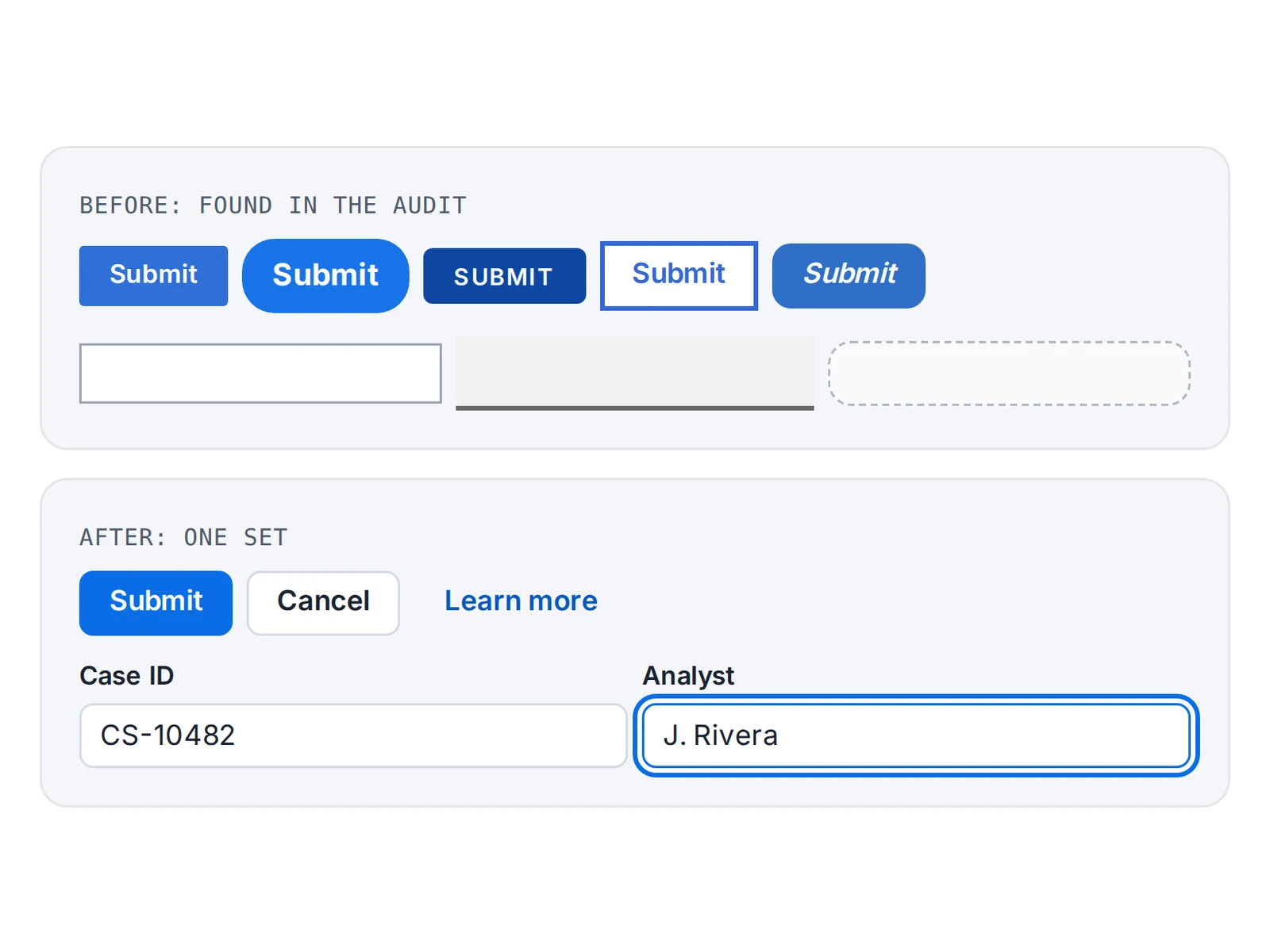
Components were inconsistent, tokens were irregular, the documentation was written for engineers rather than designers, and nothing had been audited for accessibility. Changes entered the system at different points, with no consistent review.
Then AI tools arrived across a long-established organization, multiplying the volume of new design and code with no standard for how any of it should be reviewed.
What I led
Three decisions turned a half-built library into a foundation teams could trust.
I lead a team of three engineers directly. Beyond that team, I lead through influence: getting product, engineering, and marketing to agree on shared standards, then building those standards with the teams who would live under them.
1
Put AI in the loop for docs and audits
Documentation lagged releases by weeks, and the team was too small to keep audits current by hand. AI drafts, and a person reviews everything before it publishes, so docs and audits now ship with the release they describe.
2
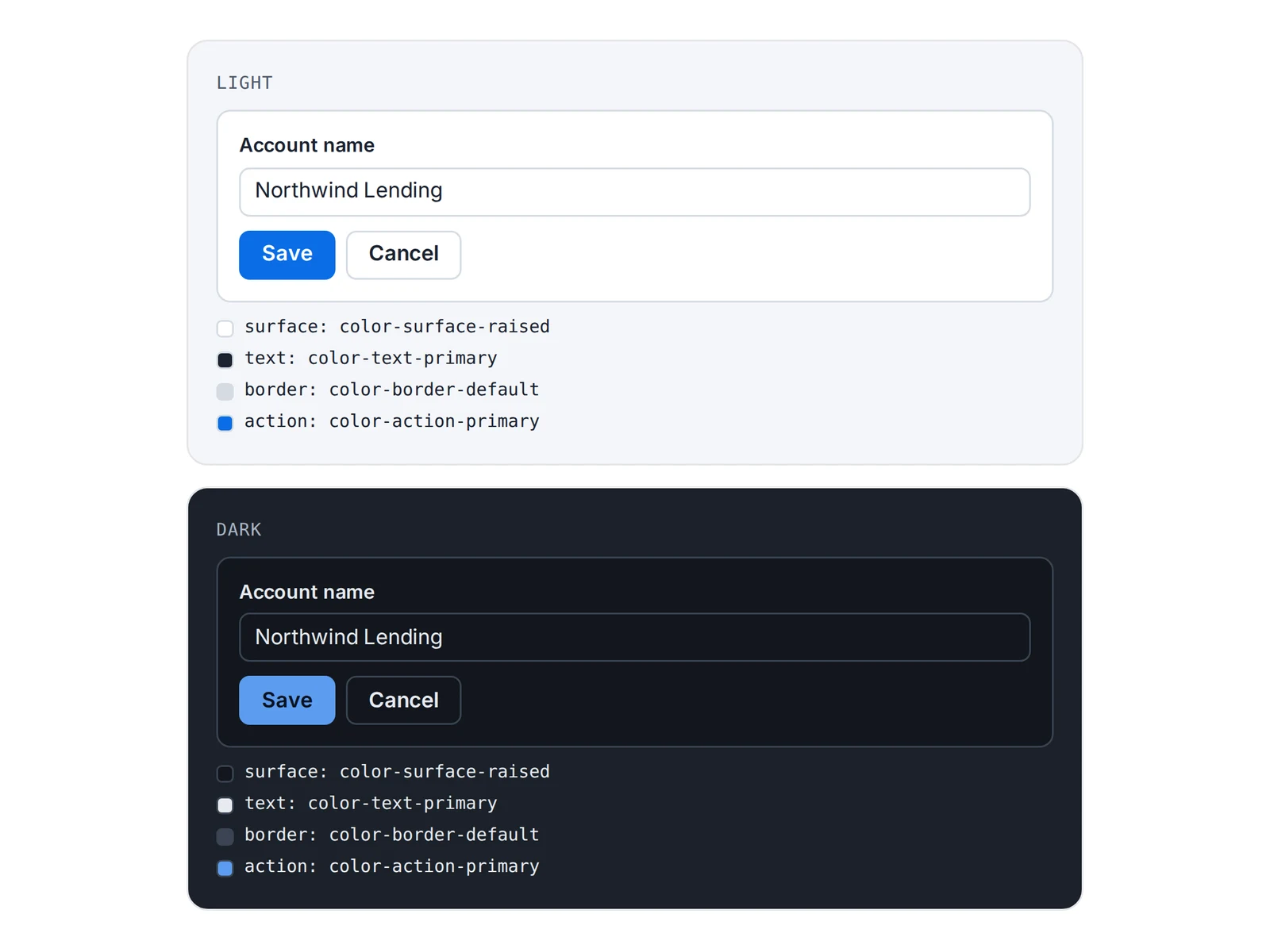
Require semantic tokens in every component
A stricter rule for component builders, in exchange for one point of change. Theme and foundation changes now reach every component without per-component edits.
3
Gate releases behind one pipeline
Every change moves through the same eight stages, from request to documentation. Review no longer depends on who happens to catch a problem.
One standard for AI-assisted work
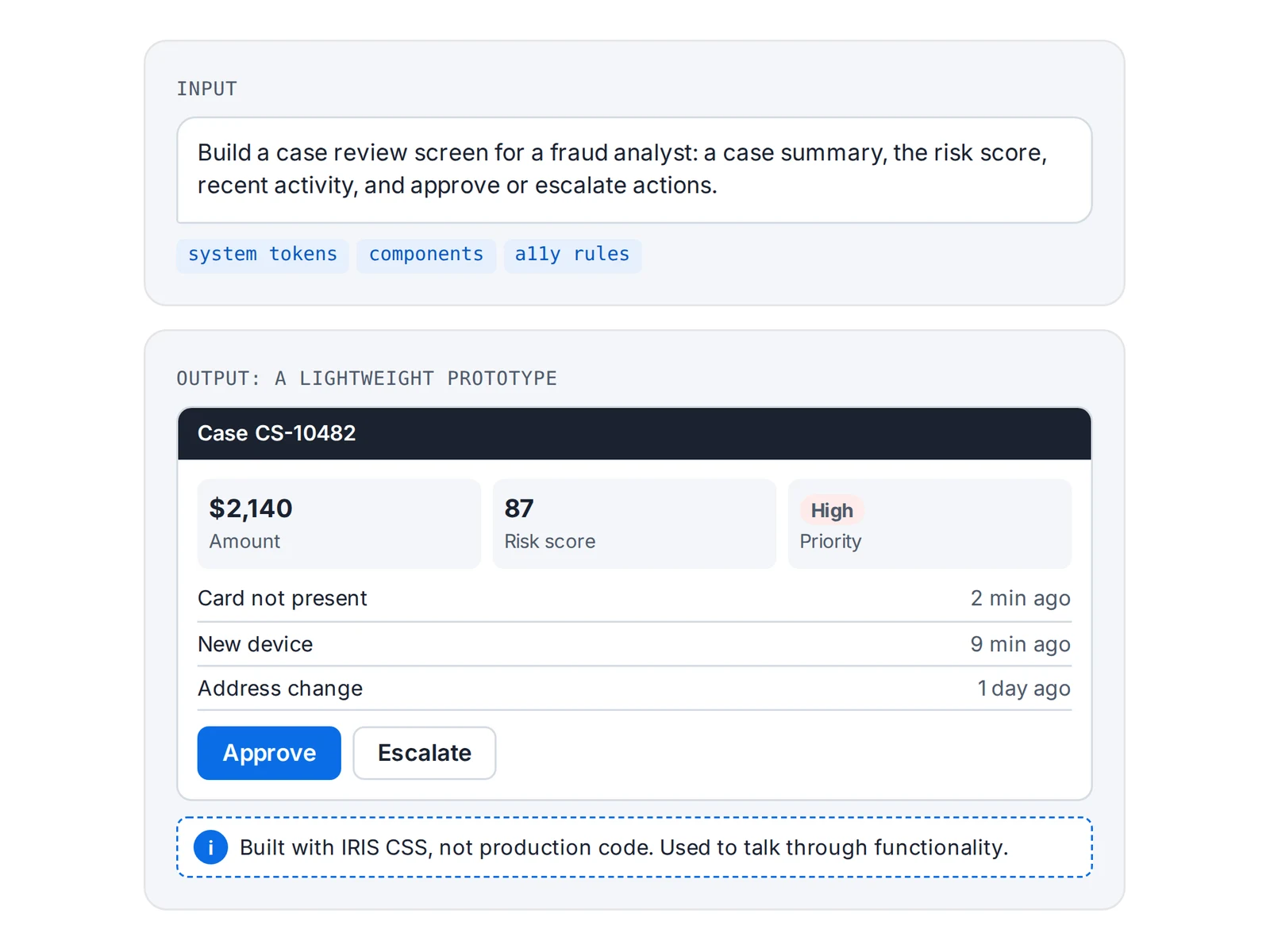
I worked across marketing and product to agree on one standard. Every piece of AI-assisted work, from a marketing page to a legacy product screen, goes through the same four checks.
FlagTeams mark work designed or coded with AI assistance when it enters review.
System checkDesigns and code must use the system’s tokens and components. One-offs need a documented reason.
AccessibilityAn automated scan, then a manual review against WCAG 2.2 AA.
Sign-offA designer and an accessibility reviewer approve before release.
Before: half built, inconsistent, never audited for accessibility.One foundation: rebuilt tokens, components, and guidance.AI in the loop: every AI-assisted change reviewed against one standard.
Outcome
A half-built, unaudited system became a consistent, accessible foundation. Releases move through one governed pipeline, documentation ships with the release, and products across marketing, platform, and legacy work follow one standard for AI-assisted work.